Long-Term Relationships with Thai Women: Reality Check
Honest guide to building lasting relationships with Thai women. Real challenges, cultural differences, and what actually works after years together.
The Insider
Expats with years of firsthand experience living and dating in Thailand.

You clicked those dating apps. You flew to Bangkok. You met someone special. Now you’re thinking long-term. Here’s what nobody tells you about building a real relationship with a Thai woman - from someone who’s been there, done that, and watched hundreds of others succeed and fail. For early dating advice, see our dating in Thailand guide.
Key Takeaways
- Cultural differences don’t magically disappear after the honeymoon phase - they actually intensify
- Family involvement is NOT optional - you’re marrying into a collective, not just dating one person
- Money conversations need to happen EARLY and explicitly, or they’ll destroy your relationship later
- Learning basic Thai isn’t romantic - it’s survival for your relationship’s long-term health
- Western relationship “rules” don’t apply here - flexibility beats stubbornness every time
- Most relationships fail not from lack of love, but from unrealistic expectations and poor communication

The First Year: When Everything Feels Perfect
Let’s be real - the beginning is incredible. Bangkok dates, beach weekends, that feeling of discovering someone completely different from what you knew back home. Everything seems easier.
But here’s the trap: You’re both on your best behavior. She’s not asking for much yet. Her family hasn’t started “needing” things. You haven’t had your first real argument about money, kids, or where to live.
The first year is the easy part. Anyone can make it work when everything’s new and exciting. The real test starts when reality kicks in.
What Actually Happens After Month 6
Around the six-month mark, things shift:
- Her family starts expecting you to help financially (if you haven’t already)
- She starts talking about marriage timelines more seriously
- Cultural differences that seemed “cute” before become actual friction points
- Her expectations of your role as a boyfriend become clearer (and more traditional)
- Friends and family start asking when you’re getting married
This isn’t a red flag - it’s just Thai relationship progression. In Thailand, if a relationship hits 6-12 months and you’re not talking marriage, people start wondering what’s wrong.
Insider Tip: Have the “what are we building?” conversation by month 3. Don’t wait until month 9 when everyone assumes you’re getting married next year. Early clarity = fewer headaches later. See our guide on dating in Thailand for early relationship dynamics.
The Cultural Differences That Actually Matter
Forget the tourist guidebook stuff about taking off shoes and not touching heads. Here are the cultural gaps that actually impact relationships:
Face (Saving Face) - Not Just Politeness
In Western relationships, we’re taught to “communicate openly” and “be honest about feelings.” In Thai culture, preserving face (yours, hers, and everyone around you) is sacred.
What this means in practice:
- Don’t criticize her in public - ever. Not even “playfully”
- Disagreements happen in private - arguing in front of others brings shame
- She won’t always tell you directly when something’s wrong - you need to read situations
- Apologizing publicly (even when wrong) can make things worse - it highlights the conflict
This drove me crazy year one. I wanted “honest communication.” She wanted harmony. We both had to meet in the middle. Learn more about Thai dating etiquette.
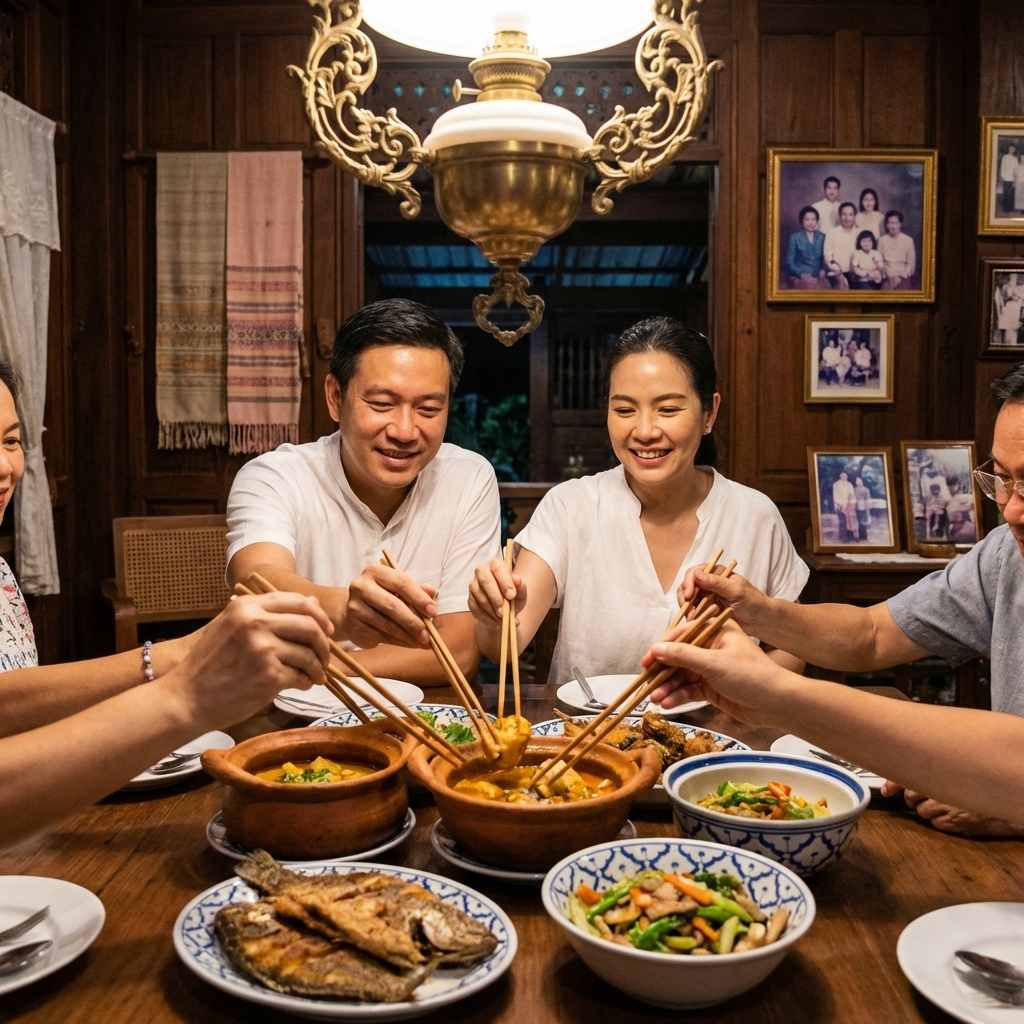
Family Isn’t Background - They’re Main Characters
Western mindset: “You’re dating her, not her family.”
Thai reality: “You’re dating her entire family structure.”
Her family will expect:
- Regular financial support (amount varies by economic class)
- Your presence at all major events (and there are MANY)
- Respect for their opinions on your relationship
- Help with siblings’ education, parents’ medical bills, house repairs
- You to take the leadership/provider role seriously
Insider Warning: If you’re not ready to support her family financially (at least to some degree), you’re not ready for a long-term relationship with a Thai woman from a traditional background. This isn’t negotiable in most cases. Learn more about Thai family culture.
Money: The Elephant in Every Room
Here’s the uncomfortable truth: Money ruins more Thai-Western relationships than anything else.
Why? Because nobody talks about it clearly enough, early enough.
In Thai culture (especially middle/working class):
- Men are expected to be primary providers
- Sending money to parents is a given, not a request
- Her salary is often for “her things” while yours covers shared expenses
- Saving together means different things (she’s including family in “together”)
Set these boundaries BEFORE moving in together:
- Monthly family support budget - Agree on a fixed amount, clearly communicated
- Emergency requests - Define what qualifies (real emergency vs. “want”)
- Shared expenses split - Who pays rent, food, utilities, travel
- Individual spending money - What each person controls fully
- Future savings goals - Down payment, kids, retirement - get specific
Insider Tip: Open a separate “family support” bank account with a monthly auto-transfer. This prevents constant requests and shows you’re contributing reliably. It also protects your main finances from scope creep. See our guide on what Thai women expect financially.
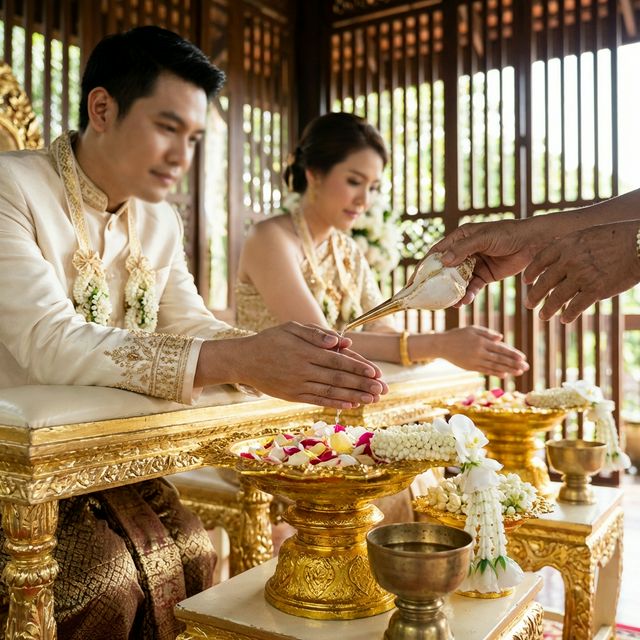
The Sin Sod Conversation (Dowry)
Eventually, this will come up. Sin Sod is the traditional “bride price” - money and gold given to the bride’s family at the wedding.
How It Actually Works
Forget the internet horror stories about $50,000 dowries (unless you’re marrying a doctor from a rich Bangkok family).
Typical ranges:
- Working class background: 50,000-200,000 THB + some gold
- Middle class background: 200,000-500,000 THB + gold
- Upper middle class: 500,000-1,000,000+ THB + significant gold
The insider secret: In many families, 50-100% gets returned to you after the ceremony. It’s for “face” - showing guests the family raised a valuable daughter.
But this varies wildly. Some families keep everything. Some expect you to use it for a house. Some return it all privately.
Your move: Have this conversation with HER first, her parents later. Ask:
- What does her family traditionally expect?
- Will any portion be returned?
- What’s the gold component?
- Can you negotiate based on your financial reality?
If she gets defensive or won’t discuss specifics, that’s a yellow flag. This should be an open conversation.
Language: You Need to Learn Some Thai
“But she speaks English!”
Cool. Her parents don’t. Her aunts don’t. The neighbors don’t. Half her friends struggle with it.
You don’t need to be fluent. But you need conversational basics for:
- Showing respect to her family (huge face points)
- Understanding what’s being said around you (prevents paranoia)
- Handling emergencies when she’s not available
- Participating in family gatherings (instead of sitting confused)
- Building actual connection with her culture
Start here:
- Basic greetings and polite phrases (khrap/kha, sawasdee, khop khun)
- Food vocabulary (you’ll eat together constantly)
- Family terms (por/mae/pee/nong)
- Essential questions (where, when, how much)
- Numbers (crucial for everything)
Apps like Ling, Pimsleur, or iTalki tutors work great. Even 20 minutes daily makes a difference.
Pros & Cons
Pros
- ✓ Shows genuine respect for her culture
- ✓ Impresses her family tremendously
- ✓ You'll actually understand what's happening around you
- ✓ Reduces miscommunication in important moments
- ✓ Makes living in Thailand way easier
Cons
- ✕ Takes consistent effort (not a weekend project)
- ✕ Thai tones are genuinely difficult for English speakers
- ✕ Reading/writing Thai is a whole other level of complexity
Where to Live: The Thailand Question
At some point, you’ll face this decision:
- Move to Thailand together
- Bring her to your home country
- Split time between both
- Live in a third country
Each has massive implications.
Living in Thailand
Pros:
- She’s near her family and support network
- Lower cost of living (usually)
- You can probably work remotely or start a business
- Cultural adjustment is on you, not her
- Kids (if you have them) grow up bilingual/bicultural
Cons:
- You’re always the foreigner (no path to citizenship)
- Visa runs and paperwork forever
- You depend on her for many daily things (language, bureaucracy)
- Career limitations depending on your field
- Healthcare quality varies outside Bangkok
Bringing Her to Your Country
Pros:
- You’re on home turf with support network
- Better career opportunities (usually)
- Access to Western systems you understand
- Kids get your citizenship automatically
- No visa stress for you
Cons:
- She’s isolated from family and culture
- Visa process is expensive and slow (6-18 months typically)
- She may struggle with weather, food, language, loneliness
- Your family/friends might not fully accept her
- She’ll resent you if she never sees her family
Insider Warning: If you bring her to your country, budget for annual trips back to Thailand. Cutting her off from family will poison your relationship eventually. Plan for 2-4 weeks yearly minimum.
The Hybrid Option
Many couples do 6 months Thailand, 6 months abroad (or 9/3 splits). This requires:
- Remote work capability for at least one of you
- Solid financial buffer for constant travel
- Flexibility in both countries
- Careful visa planning
It’s the best of both worlds if you can pull it off financially.
Kids: Different Expectations from Day One
If children are in your future, discuss this EARLY. Thai and Western parenting approaches differ significantly.
What Thai Mothers Typically Expect
- Grandparents are primary childcare - not daycare, not nannies (if living in Thailand)
- Kids stay close to family - boarding school abroad might not be acceptable
- Education is PRIORITY #1 - expect significant investment in tutoring, private schools
- Respect and obedience first - Western “free expression” parenting feels wrong to many Thai families
- Bilingual raising - kid speaks Thai with her, English with you
Points of Friction
Common arguments Thai-Western couples have about kids:
- Discipline methods - What’s acceptable punishment?
- Religious raising - Buddhist temple visits expected?
- Time with family - How much is too much?
- Spoiling by grandparents - How to set boundaries?
- Education location - Thai school, international school, or abroad?
Hash this out BEFORE pregnancy, not during.

The Real Success Factors
After watching dozens of Thai-Western couples over the years - some thriving at 10+ years, others crashing at 18 months - here’s what separates success from failure:
1. Realistic Expectations
Couples who make it: Know it’s going to be hard. Expect cultural friction. Plan for family financial support. Accept they’re building something new, not recreating what they had back home.
Couples who fail: Think love conquers all. Get shocked when reality doesn’t match the honeymoon. Resent the differences instead of embracing them.
2. Financial Transparency
Couples who make it: Have clear, explicit money boundaries. Know exactly how much goes to family monthly. Discuss big purchases. Plan together for the future.
Couples who fail: Avoid money talks until there’s a crisis. Let resentment build over “secret” sending money. Fight about every family request because nothing’s established.
3. Cultural Humility
Couples who make it: Both partners bend. He learns Thai culture and language. She explains things instead of expecting him to “just know.” They CREATE their own hybrid culture.
Couples who fail: One partner expects the other to fully assimilate. “She needs to be more Western” or “You need to understand this is Thailand.” No middle ground.
4. Communication Systems
Couples who make it: Find ways to communicate across cultural styles. Learn each other’s conflict resolution approaches. Develop private ways to discuss sensitive topics.
Couples who fail: Keep using their home culture’s communication style. Get frustrated when it doesn’t work. Shut down instead of adapting.
5. Family Integration (But With Boundaries)
Couples who make it: Embrace her family while setting clear boundaries. Participate in family life but maintain couple privacy. Support financially within established limits.
Couples who fail: Either reject her family entirely (relationship killer) or have zero boundaries (also a relationship killer). No balance.
Insider Tip: Monthly couples check-ins save relationships. Set aside 1-2 hours monthly for a “state of the union” talk - what’s working, what needs adjustment, upcoming family events, budget review. Boring? Yes. Effective? Absolutely.
Red Flags vs. Cultural Differences
Not everything uncomfortable is a “red flag.” Some things are just cross-cultural friction. Here’s how to tell the difference:
Cultural Difference (Normal)
- Regular money to parents (within agreed budget)
- Lots of family involvement in daily life
- Different communication style (indirect vs. direct)
- Strong opinions about food, cleanliness, spirituality
- Expectation you’ll participate in cultural/family events
Actual Red Flags
- Lies about money or where it’s going
- Isolation from YOUR friends and family
- Constant drama/financial “emergencies”
- Refuses to discuss future plans concretely
- Major personality changes post-commitment
- Controlling behavior or jealousy spiraling
If you can’t tell which category something falls into, ask expats who’ve been in relationships 5+ years. They’ll know. Or read our Thai dating scams guide for specific red flags.
The Marriage Decision
Eventually you’ll decide: marry or move on. Don’t let this drift for years.
Consider marriage when:
- You’ve survived at least one major disagreement and resolved it
- You’ve spent time with her family repeatedly and can handle that dynamic
- You’ve discussed money, kids, location, religion, and careers concretely
- You’ve seen her in normal daily life, not just dates and trips
- You’re ready to support her family financially long-term
- You actually enjoy spending boring Tuesday evenings together
Don’t marry because:
- “She wants to and I don’t want to lose her”
- “I’ve already spent so much time/money”
- “She’s 30+ and feeling pressure”
- “My visa situation is easier if married”
- “Everyone expects it now”
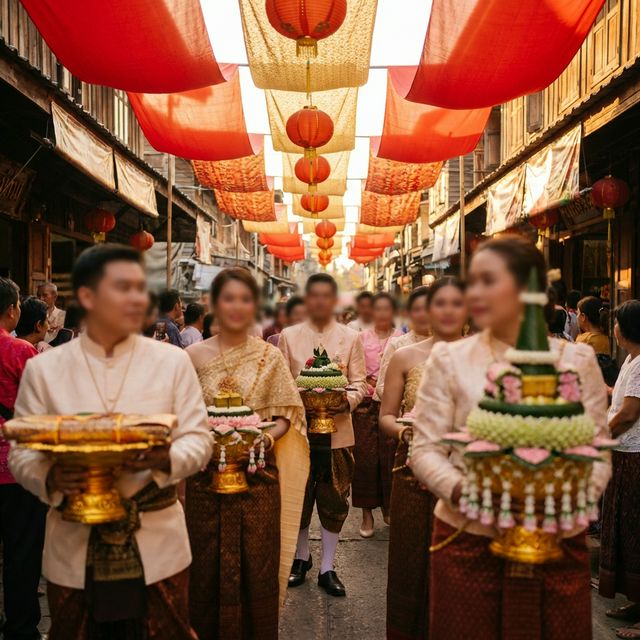
Marriage to a Thai woman means marriage to her family, her culture, and often to Thailand itself (even if you don’t live there). Make sure you’re actually ready for all of that.
The Verdict: Is It Worth It?
Absolutely - if you go in with eyes open.
Thai-Western relationships can be incredibly fulfilling. You get a partner from a culture that often values loyalty, family, and partnership differently than the West. You build something genuinely unique.
But it requires:
- Emotional maturity to handle cultural differences
- Financial stability to support family obligations
- Flexibility to create new relationship rules
- Patience to learn and adapt constantly
- Humility to admit when you don’t understand something
It’s not for everyone. If you want a low-effort relationship that fits Western norms perfectly, date someone from your home country.
If you’re ready to build something cross-cultural, accepting both the challenges and incredible rewards, then Thailand offers some of the most devoted, family-oriented, and genuine partners you’ll find anywhere.
Just don’t bullshit yourself about what you’re signing up for. The couples who make it long-term? They knew what they were getting into and said yes anyway.
FAQ
How much money should I send to my Thai girlfriend’s family monthly?
There’s no universal answer - it depends on her family’s economic situation and your financial capacity. Typical ranges: Working class families might expect 5,000-15,000 THB monthly, middle class 10,000-30,000 THB. The key is discussing and agreeing on a specific amount upfront, then setting it as a recurring transfer so it’s predictable and doesn’t create constant negotiation. Make sure this fits your budget sustainably.
Is my Thai girlfriend only with me for money?
Look at her behavior: Does she work or has she quit expecting you to cover everything? Does she spend wisely or wastefully? Does she show affection beyond what you provide financially? Does she introduce you to family genuinely or keep you separate? Red flags: Won’t discuss money clearly, constant “emergencies,” lifestyle doesn’t match her income, inconsistent stories about family needs. Green flags: Has her own income, reasonable requests, transparent about family situation, relationship deepens beyond financial support.
Should I learn Thai if my girlfriend speaks English?
Yes, at least conversational basics. Here’s why: Her family likely doesn’t speak English well (this is crucial for relationship acceptance), you’ll understand context in social situations instead of feeling paranoid, it shows genuine respect for her culture (not just dating her), and it’s essential if you ever live in Thailand. You don’t need fluency, but 6 months of consistent study to reach basic conversation level will transform your relationship dynamic.
How long should we date before getting married?
Minimum 1-2 years, with significant time spent together in normal daily life (not just vacations). You need to experience: Living together or near each other for extended periods, spending time with her family repeatedly, handling at least one major disagreement, discussing money/kids/location concretely, seeing each other in non-romantic daily situations. Avoid marrying within the first year - the “honeymoon phase” hides issues that surface later.
What if her family’s financial expectations are too high?
Be honest early. Explain your financial reality clearly (exact numbers, not vague “I can’t afford that”). Differentiate between regular support you CAN provide and emergency requests. If expectations truly don’t match your capability, you have three options: Find compromise (maybe less frequent but consistent), accept you’re not financially compatible, or she needs to manage family expectations herself (which is fair to ask). Don’t promise what you can’t sustain - that poisons everything later.

Safety Tip: Secure Your Connection
Using dating apps on public Wi-Fi in Thailand? Don't risk your privacy. We recommend NordVPN to keep your chats private and access geo-blocked content.
Discount available